Big windows can look amazing, but picking out the right curtains for them can feel like a puzzle for new decorators. It’s not always easy to know where to start, and sometimes it just feels overwhelming. Don’t worry, though!
We’re here to make it super simple. We’ll walk you through it step-by-step, showing you exactly what to think about. Get ready to learn how to pick perfect curtains that make your large windows shine.
Key Takeaways
- You’ll learn how window size affects curtain choices.
- We’ll show you how to measure your large windows correctly for curtains.
- You’ll discover different curtain styles that work best for big windows.
- We’ll talk about fabric types and how they impact the look and feel.
- You’ll get tips on choosing colors and patterns that match your room.
- We’ll cover hardware and installation for a professional finish.

Making Sense of Curtains for Big Windows
Large windows are beautiful, letting in lots of light and offering great views. But they also present a unique challenge when it comes to dressing them with curtains. Unlike smaller windows, large ones need curtains that are not only functional but also make a statement.
They need to provide privacy and light control without overwhelming the space. For beginners, this can seem like a big task. There are so many options for size, fabric, style, and how they hang.
This section will help you understand why choosing curtains for these grand openings is a bit different and what factors are most important right from the start.
Understanding the Scale of Large Windows
When we talk about large windows, we mean anything that takes up a significant portion of a wall. This could be floor-to-ceiling windows, wide picture windows, or multiple windows joined together. Their size means they have a big impact on how a room looks and feels.
Curtains for these windows aren’t just decorative; they’re structural design elements. They can make a room feel cozier or more dramatic. Getting the scale right is the first step to success, ensuring your curtains complement, rather than compete with, the window’s natural grandeur.
- Large windows require careful consideration of size and proportion.
- Curtains can dramatically alter the mood and style of a room with big windows.
- Functionality, like light control and privacy, is just as important as looks.
The sheer size of these windows means standard curtain sizes often won’t work. You’ll likely need custom sizing or specific types of curtains designed for larger spans. Thinking about the window’s role in the room—is it a focal point or meant to blend in?—also guides your choices.
This upfront thinking saves a lot of hassle later on when you’re looking at actual curtain options.
The Challenge for Beginners
For someone new to interior decorating, the sheer number of choices can be overwhelming. Where do you even begin when a window might be eight feet wide or taller? Beginners often worry about making a mistake that will look obvious on such a large scale.
They might not know how to measure properly, what styles are best, or even what kind of fabric will hang well. The goal is to simplify this process, breaking down the decision-making into manageable steps. We want to empower you to feel confident in your choices and create a beautiful, well-dressed window that you’ll love.
- Beginners can feel lost due to the wide variety of choices for large windows.
- Fear of making costly mistakes can lead to indecision.
- Simple, clear guidance is key to making the process enjoyable and successful.
This guide is designed to be your easy-to-follow map. We’ll cover everything from basic measurements to final styling touches. By the end, you’ll have a clear plan for finding curtains that perfectly suit your large windows and your home’s style.
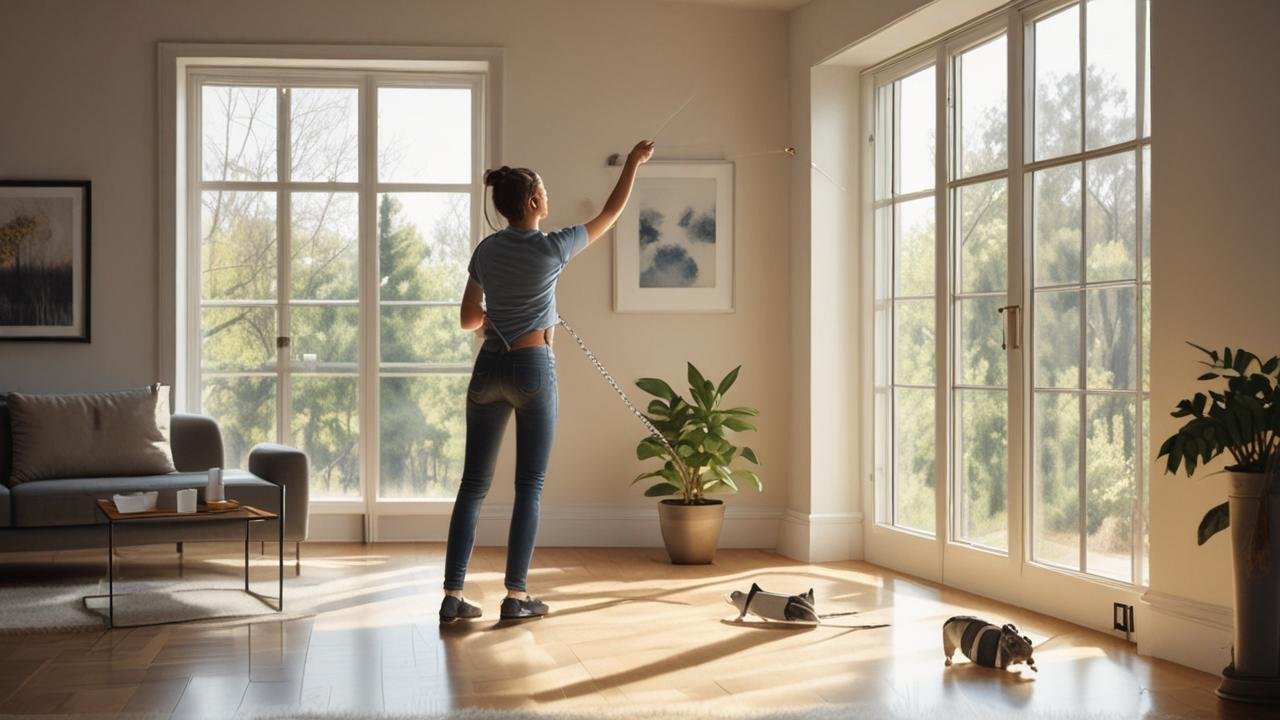
Measuring Your Grand Openings Accurately
Getting the measurements right is the most critical step when choosing curtains for large windows. If your measurements are off, even the most beautiful curtains won’t hang or look as intended. For large windows, this means being extra precise and considering not just the glass area but also the surrounding wall space.
We’ll go over how to measure for width and length, and also discuss where to place the curtain rod for the most dramatic and functional effect. Accuracy here prevents costly mistakes and ensures your curtains fit like a glove.
Measuring for Width
When measuring for the width of curtains for large windows, you need to account for more than just the glass. You want the curtains to extend beyond the glass when open to let in maximum light. A good rule of thumb is to measure the width of the window frame itself and then add extra inches on each side.
This extra width allows the curtains to stack neatly without blocking too much of your view when they’re pulled back. For very wide windows, you might need multiple panels to achieve the right fullness and coverage.
- Measure the entire width of the window frame.
- Add at least 6-12 inches to each side of the frame for curtain rod placement.
- Consider the fullness of the curtains—more fabric means a richer look.
A common mistake is measuring only the glass. This results in curtains that look too narrow and leave large gaps when closed. For a standard window, you might add 10-20 inches to the total width.
For large windows, especially those spanning many feet, you might add even more. Think about how much fabric you want to gather when the curtains are open. This is often described as a fullness ratio, typically between 1.5 to 3 times the width of the area you want to cover.
Calculating Curtain Width and Panel Count
Once you have your total desired width (window width plus extra for rod placement), you can figure out how much fabric you need. Curtains are sold in panels, and each panel has a specific width. You’ll want to divide your total desired width by the width of one curtain panel to find out how many panels you need.
For example, if your total desired width is 120 inches and each panel is 50 inches wide, you’ll need at least three panels (120 / 50 = 2.4, round up to 3). This calculation ensures your curtains have enough fabric to look full and appealing when drawn.
For very large windows, you might end up with four, six, or even more panels. This might sound like a lot, but it’s what gives the curtains their luxurious drape and ensures they close properly, providing good light blocking and privacy. It’s always better to have a little too much fabric than not enough.
You can always adjust the final look, but adding fabric after the fact is impossible.
Measuring for Length
The length of your curtains is just as important as the width. For large windows, you have a few options depending on the look you want. The most common and elegant choice for large windows is floor-length curtains.
These should just graze the floor or have a slight puddle for a more dramatic effect. You’ll measure from where the curtain rod will be mounted down to the floor. Remember to account for the curtain’s heading, like grommets or pleats, which will affect the final length.
- Measure from the curtain rod placement down to the desired finished length.
- For floor-length curtains, aim for them to just touch the floor or create a slight puddle.
- Consider any hardware like rings or hooks that will add to the hanging length.
To get the most accurate length measurement, hang your curtain rod at its intended height first. Then, measure from the top of the rod down to where you want the curtain to end. If you don’t have the rod yet, a good guideline is to place the rod 4-6 inches above the window frame.
This makes the window appear taller. For a truly grand look, some designers place the rod even higher, closer to the ceiling. Always double-check your measurements at multiple points across the width of the window, as floors and ceilings can sometimes be uneven.
Understanding Curtain Length Options
Beyond floor-length, some people prefer curtains that end just above the floor, about half an inch to an inch. This is a cleaner look and can be easier if you have pets or children, as it prevents curtains from getting dirty or snagged. Another option is a sill-length curtain, which ends right at the window sill, but this is generally not recommended for large windows as it can make them look cut off.
For grand windows, the impact of floor-length curtains is usually unmatched.
If you’re aiming for a dramatic, romantic feel, you might choose to have your curtains puddle on the floor. This means the curtain is a few inches longer than needed, creating a soft heap at the bottom. This look requires extra fabric and can be tricky to maintain, but it adds a luxurious touch.
When deciding, visualize the final look in your room and consider how practical it needs to be for your lifestyle.
Rod Placement and Height
The placement of your curtain rod can make a huge difference in how your large windows are perceived. For large windows, mounting the rod higher than the top of the window frame can create a sense of height and grandeur. Extending the rod wider than the window frame itself also makes the window appear larger and allows for better light control when the curtains are open.
This strategy of going wider and higher is a key trick in interior design for making windows feel more impactful.
- Mount curtain rods higher than the window frame to emphasize height.
- Extend curtain rods beyond the window frame for wider appearance and better light control.
- Ensure the rod is securely fastened to wall studs for heavy curtains.
When you are deciding on the height, think about the ceiling. If you have very high ceilings, mounting the rod closer to the ceiling can enhance that vertical space. For a typical 8-foot ceiling, mounting the rod 4-6 inches above the frame is a good starting point.
If your window is already quite tall, you might not need to go as high. The goal is to create a visually pleasing proportion between the window, the curtains, and the wall space.
Similarly, for width, extend the rod at least 6 to 12 inches beyond each side of the window frame. This allows the curtains to stack off the glass when open, making the window seem wider and letting in more natural light. For exceptionally wide windows, you might need a multi-rod system or a very sturdy, longer rod.
The hardware needs to be strong enough to support the weight of the fabric, especially for large draperies.
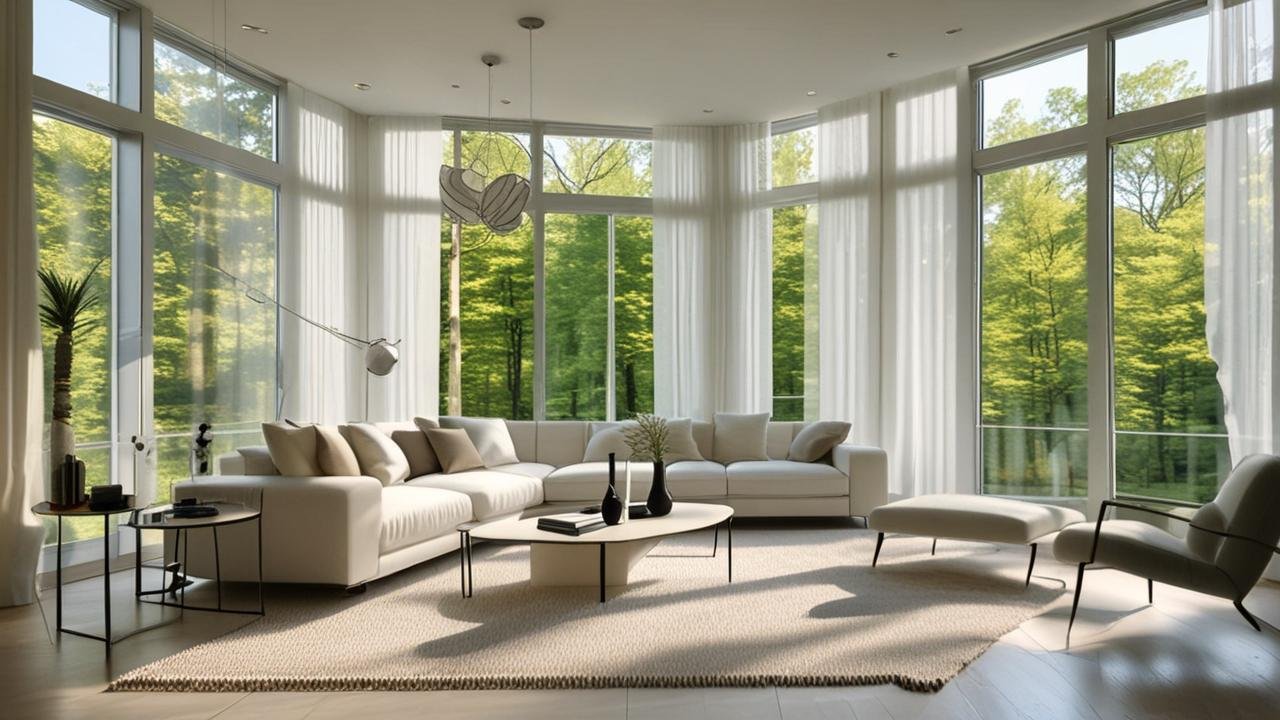
Choosing the Right Curtain Styles for Big Windows
The style of curtains you choose will set the tone for your room. For large windows, certain styles work better than others, offering both aesthetic appeal and practical benefits. We’ll explore popular options like drapes, panels, and even functional solutions that can enhance your space.
The key is to find a style that complements your home’s architecture and your personal taste, while also meeting your needs for light, privacy, and insulation.
Drapery Panels: The Classic Choice
Drapery panels are the most traditional and often the most elegant choice for large windows. They are typically made from heavier fabrics and are designed to hang from a rod, often with pleats at the top. These panels can be functional, meaning they can be opened and closed to control light and privacy, or purely decorative, left mostly open to frame the view.
For large windows, multiple panels are often used to create a full, luxurious look.
- Drapery panels offer a classic and sophisticated look for large windows.
- They can be fully functional for light control or used as decorative framing.
- Multiple panels are usually needed to cover wide expanses properly.
The beauty of drapery panels lies in their versatility. You can choose from various pleating styles, such as pinch pleats, goblet pleats, or rod-pocket styles. Each pleat creates a different look and affects how the fabric hangs.
Pinch pleats, for instance, offer a very tailored and formal appearance, while a rod-pocket style is more casual. For large windows, the weight and drape of the fabric are crucial. Heavier fabrics like velvet, linen blends, or thick cotton will hang beautifully and provide good insulation.
Fullness and Pleating Explained
The “fullness” of drapery panels refers to how much fabric is used relative to the width of the window. For large windows, you’ll want more fullness to ensure the curtains look rich and not skimpy when closed. A fullness ratio of 2 to 3 times the width of the window is common for a luxurious look.
Pleating also plays a role; tighter pleats require more fabric than looser ones. For example, triple pinch pleats are very full and create deep folds.
When selecting pleats, consider the overall style of your room. Formal rooms might benefit from structured pleats like pinch pleats or goblet pleats. More relaxed spaces might work well with less formal styles like grommet tops or even simple rod-pocket panels.
The hardware you choose, like finials and curtain rods, should also match the style of the pleats and the room.
Sheer Curtains: Light and Airy Elegance
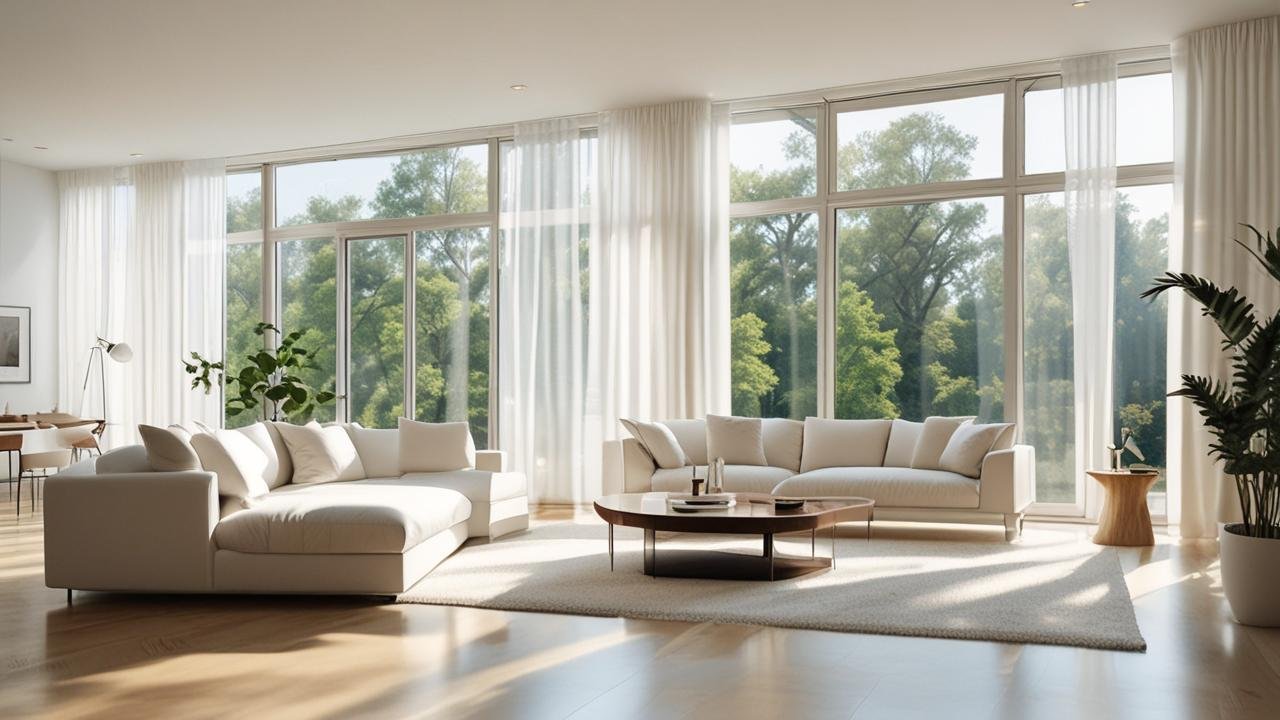
Sheer curtains offer a delicate and airy feel, perfect for large windows where you want to maintain a sense of openness and let in natural light. They are made from lightweight, translucent fabrics like voile, lace, or lightweight linen. While sheers don’t offer much privacy or light blocking on their own, they can be layered with heavier drapes or used alone in rooms where privacy is not a primary concern, such as a formal living room with a beautiful view.
- Sheer curtains add a touch of elegance and softness to large windows.
- They allow ample natural light to filter into the room.
- Sheers can be used alone for decoration or layered with other curtains for privacy.
For very large windows, a single, wide panel of sheer fabric can create a stunning effect. Alternatively, you can use multiple sheer panels that can be tied back or left to drape gracefully. The lightness of sheers makes them less susceptible to overwhelming a large space.
They can soften the hard lines of a window and add a gentle texture to the room’s decor. If privacy is a concern, consider a slightly heavier sheer or one with a subtle pattern that offers a bit more opacity.
Layering Sheers with Drapes
Layering sheer curtains with heavier drapes is a fantastic way to get the best of both worlds for large windows. The sheers provide a soft, diffused light during the day, while the drapes can be drawn at night for full privacy and light control. This approach adds depth and dimension to your window treatment.
You can use a double curtain rod to hang both layers independently. This setup is both functional and aesthetically pleasing, offering flexibility throughout the day.
When layering, consider the color and texture of both fabrics. A crisp white sheer paired with deep, rich drapes can create a beautiful contrast. Or, for a more subtle look, choose sheers and drapes in similar color families but with varying textures.
The sheers act as a soft veil, softening the look of heavier fabrics and adding a touch of luxury. This layering technique is particularly effective on grand windows, as it adds visual interest without making the space feel cluttered.
Other Style Considerations for Large Windows
Beyond traditional panels and sheers, other styles can also work well for large windows. Roman shades, when custom-made for wide spans, can offer a sleek, modern look. Roller blinds can also be effective, especially for very modern interiors or where a minimalist approach is desired.
For a more casual vibe, consider tab-top curtains or tie-top curtains, though these might require more frequent adjustment on very large windows.
- Consider options like Roman shades or roller blinds for a clean, modern look.
- Tab-top or tie-top curtains offer a more casual style.
- The weight and ease of operation are key factors for any style on large windows.
When choosing a style, always think about how easy it will be to open and close the curtains. Very heavy fabrics on extremely wide windows can be difficult to manage if the hardware isn’t up to the task. Motorized options are available for very large or hard-to-reach windows, adding a touch of luxury and convenience.
For a more budget-friendly approach, opt for lighter fabrics or styles that don’t require extensive manipulation.
The overall aesthetic of your room should guide your style choice. A minimalist room might suit the clean lines of roller blinds or simple, unadorned panels. A more traditional or bohemian space could embrace the fullness and texture of pleated drapes or layered sheers.
The key is to match the style to the room’s personality and the window’s architectural features.
Fabric Matters: Weight, Texture, and Function
The fabric of your curtains plays a huge role in their appearance, how they hang, and their practical benefits. For large windows, the fabric choice is especially important because it impacts the overall feel and function of the room. We’ll explore different fabric types, their textures, weights, and how they affect light control, privacy, and insulation.
Choosing the right fabric can transform your large windows from just openings into beautiful design features.
Weight and Drape
The weight of the fabric directly influences its drape—how smoothly and elegantly it hangs. For large windows, heavier fabrics generally provide a more luxurious and substantial look. Think about materials like velvet, thick linen blends, chenille, or even jacquards.
These fabrics have a natural weight that helps them fall in beautiful, even folds, creating a sophisticated appearance. Lighter fabrics, like sheer voile or thin cotton, can look flimsy on large expanses and may not hang as smoothly, often requiring more panels to achieve a pleasing fullness.
- Heavier fabrics create a more luxurious and substantial drape on large windows.
- Fabric weight affects how well curtains hang and their overall aesthetic.
- Lighter fabrics might require more panels or can look less impactful on big windows.
Consider the environment where the curtains will be used. In a formal dining room or living room, heavier, more opulent fabrics like velvet or brocade can add a touch of grandeur. In a bedroom, you might opt for a medium-weight fabric that offers good light blocking and insulation for a comfortable sleep.
The drape also affects how the curtains move; heavier fabrics tend to sway less dramatically than lighter ones, offering a more stable and elegant presence.
The “hand” of the fabric, or how it feels to the touch, also contributes to its drape. Fabrics with a soft hand tend to flow more gracefully. When you’re shopping, try to feel the fabric.
Does it feel substantial? Does it have a nice weight to it? Imagine it hanging from a rod; does it look like it will create beautiful folds, or will it be stiff and awkward?
Light Control and Privacy
The opacity of a fabric determines how much light it blocks and how much privacy it offers. For large windows, which let in a lot of natural light, this is a key consideration. Fabrics are often categorized by their light-blocking capabilities: sheer, light-filtering, room-darkening, and blackout.
For large windows, you might need to balance the desire for natural light with the need for privacy, especially in the evenings.
- Choose fabric opacity based on your need for light and privacy.
- Sheer fabrics offer minimal privacy and light blocking.
- Room-darkening and blackout fabrics are best for light control and privacy.
Sheer fabrics are nearly transparent, allowing maximum light and visibility. Light-filtering fabrics allow diffused light to pass through while obscuring the view from outside. Room-darkening fabrics block most light, creating a dimmer environment, and offer good privacy.
Blackout fabrics block nearly 100% of light, making them ideal for bedrooms or media rooms. For large living areas or dining rooms, light-filtering or room-darkening fabrics are often a good compromise.
If you want a room to be completely dark, like a home theater, blackout linings can be added to almost any fabric. This is a great option because it allows you to choose any fabric style you like and then add the functional blackout layer. It’s a common solution for large windows in bedrooms where light control is paramount for sleep.
The added lining also contributes to insulation, which can be a significant benefit for large glass surfaces.
Texture and Pattern
Texture and pattern can add depth and visual interest to your large window treatments. A textured fabric, like a slubby linen, a woven jacquard, or a soft velvet, can add subtle richness without being overpowering. Patterns, on the other hand, can make a bolder statement.
For large windows, you might choose a larger, more impactful pattern, or a subtle, tone-on-tone pattern that adds texture from a distance.
- Texture adds subtle depth and interest to large window treatments.
- Patterns can make a bold statement or add subtle visual appeal.
- Consider the scale of the pattern relative to the size of the window and room.
When selecting patterns for large windows, scale is important. A tiny, intricate pattern might get lost on a vast expanse of fabric, making it look busy or indistinct. Conversely, an overly large and bold pattern might overwhelm a smaller room.
A good rule of thumb is to choose a pattern whose elements are in proportion to the size of the window and the room. For example, a floral pattern with large blooms might be perfect for a grand window in a spacious room.
Texture is a more understated way to add interest. A chunky knit fabric, a silky satin, or a natural raw silk can all bring a tactile quality to your curtains. This is especially effective if your walls are a solid color, as the texture of the curtains provides a focal point.
Combining texture and pattern can also be done effectively, perhaps with a subtly textured fabric in a bold color, or a patterned fabric with a noticeable weave.
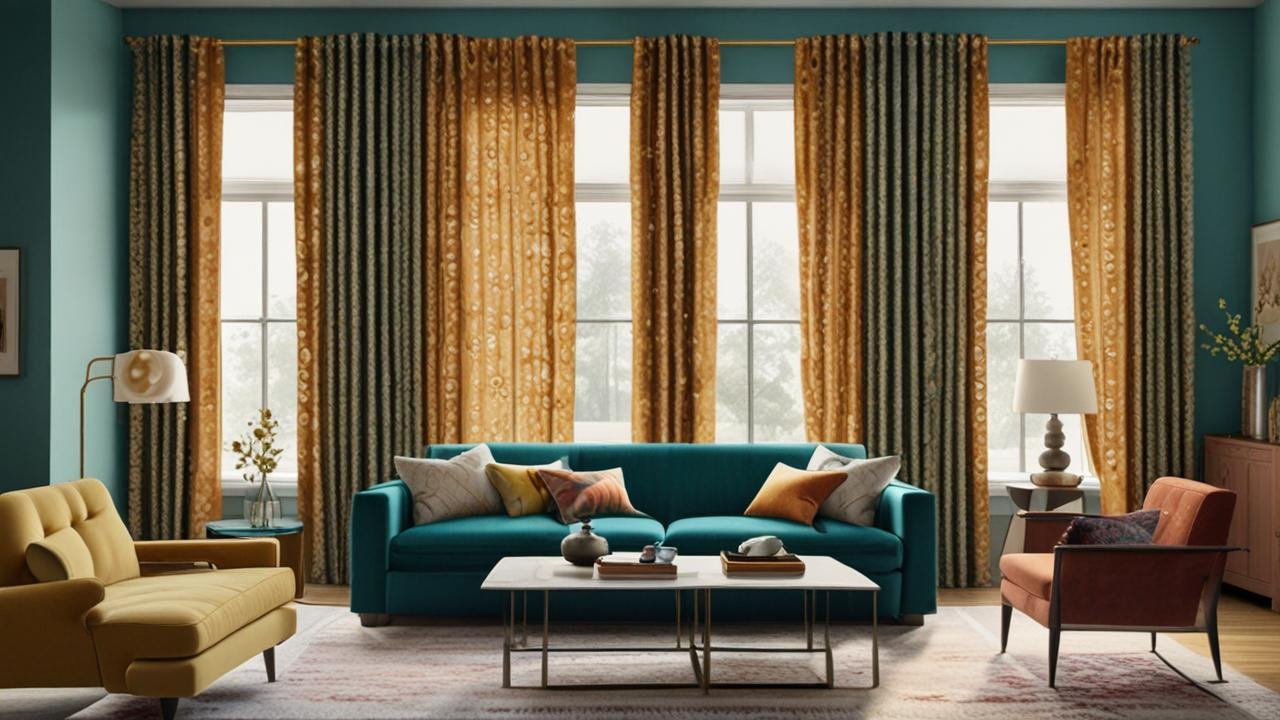
Color and Pattern Selection for Impact
The colors and patterns you choose for your large window curtains have a significant impact on the overall ambiance of your room. They can make a space feel larger, cozier, brighter, or more dramatic. For large windows, these elements become even more crucial because they command a significant visual presence.
We’ll explore how to select colors and patterns that enhance your decor and achieve the desired mood.
Choosing Colors that Complement Your Room
When selecting colors for curtains on large windows, consider the existing color palette of your room. You have a few options. You can choose curtains that match the wall color for a seamless, expansive look.
This is great if you want the window treatments to blend in and allow other elements of the room to stand out. Alternatively, you can select curtains in a complementary color that provides a gentle contrast and adds visual interest. A soft neutral, like a warm beige or a cool grey, often works well as a backdrop.
- Match curtains to wall color for a cohesive and expansive feel.
- Choose complementary colors to add gentle contrast and visual interest.
- Consider how the color will affect the room’s light and mood.
For a bolder statement, consider accent colors. If your room has pops of color in pillows, artwork, or rugs, you can draw one of those colors into your curtains. This creates a cohesive design that feels intentional and stylish.
Remember that light colors can make a room feel brighter and more open, while dark colors can create a sense of coziness and intimacy. The direction your windows face also matters; north-facing rooms may benefit from warmer colors to combat a cooler light, while south-facing rooms can handle cooler tones.
The material and texture of the fabric will also affect how the color appears. A deep navy velvet will look very different from a navy linen blend. Velvet absorbs more light, giving a richer, deeper hue, while linen might have a slightly more matte and textured appearance, making the color seem softer.
Always try to get fabric swatches to see the color in your room’s natural light at different times of the day.
Pattern Play: Scale and Style
Patterns can bring life and personality to your large windows. For grand windows, consider the scale of the pattern. A small, busy pattern might look chaotic on a large curtain panel, while a large-scale motif can be stunning and draw the eye.
Think about geometric prints, floral designs, abstract art, or even subtle stripes. The pattern you choose should align with the overall style of your room.
- Large-scale patterns work well for large windows, drawing attention and adding drama.
- Small patterns can sometimes look busy or get lost on big curtains.
- The pattern should complement, not compete with, other decor elements.
If you have a lot of pattern elsewhere in your room (e.g., patterned upholstery or rugs), it might be wise to choose a more subdued or solid-colored curtain for your large windows. Or, you could opt for a pattern that picks up on an existing color in your room but is less dominant. Another approach is to use a tone-on-tone pattern, where the pattern is created by variations in shade or texture within the same color family, adding subtle visual interest.
Stripes can be particularly effective on large windows. Vertical stripes can make ceilings appear higher, while horizontal stripes can make a window seem wider. Consider the width of the stripes and their spacing; this will influence the overall effect.
For a dramatic look, bold, wide stripes can be very impactful. For a more classic feel, thinner, more subtle stripes might be preferred.
Considering the View and Natural Light
Your large windows likely offer a beautiful view, and your curtains should complement rather than obscure it. If the view is a major focal point, you might opt for lighter-colored curtains or sheers that allow you to see out easily. You can use tie-backs or side panels to frame the view, drawing attention to it when the curtains are open.
- Frame your view with curtains that complement, rather than hide, the scenery.
- Use lighter colors or sheers if preserving the view is a priority.
- Consider how curtains will interact with natural light throughout the day.
The amount of natural light your room receives is also a factor. If your room is already very bright, you might want curtains that offer some light filtering or room-darkening capabilities to manage glare. Conversely, in a darker room, you’ll want fabrics that are lighter in color and less opaque to maximize the natural light.
The interplay between your chosen curtains and the natural light will significantly shape the room’s atmosphere. It’s a good idea to test fabric samples in the room at different times of the day to see how they look and feel with varying light conditions.
For instance, imagine a living room with floor-to-ceiling windows overlooking a garden. You might choose elegant, floor-length linen curtains in a soft sage green. When open, they perfectly frame the greenery outside.
During the day, the linen filters the sunlight, creating a warm glow. In the evening, they can be drawn for privacy, offering a sense of enclosure. This thoughtful combination ensures the curtains enhance both the view and the indoor comfort.

Hardware and Installation: The Finishing Touches
Once you’ve chosen your perfect curtains, the hardware and installation are the final steps that bring it all together. The right curtain rod, finials, and brackets are not just functional; they are design elements in themselves. Proper installation ensures your curtains hang beautifully and operate smoothly.
For large windows, sturdy hardware is especially important to support the weight of the fabric.
Selecting the Right Curtain Rod
The curtain rod should complement the style of your curtains and your room. For large windows, you’ll need a rod that is long enough and strong enough to support the weight of the fabric. Metal rods are generally stronger than wooden ones, and thicker rods are better for heavier curtains.
Consider decorative rods with stylish finials (the decorative end caps) that add a finishing touch.
- Choose a rod that is long enough to extend beyond the window frame on both sides.
- Ensure the rod is strong enough to support the weight of your chosen curtains.
- Finials and brackets should match the style of your room and curtains.
For very wide windows, you might need a traverse rod, which has a built-in mechanism for drawing curtains open and closed using a cord or wand. This is much easier than manually pulling heavy draperies. Alternatively, you can use multiple rods combined with support brackets in the middle to prevent sagging.
The diameter of the rod should be proportionate to the size of the window and the weight of the curtains. A thin rod on a large, heavy drape can look out of place and may not be strong enough.
The material of the rod—such as brushed nickel, oil-rubbed bronze, or polished brass—should coordinate with other metal accents in your room, like drawer pulls or lighting fixtures. The finials can range from simple balls to ornate designs, adding a personalized touch to your window treatments. Ensure the finials don’t interfere with the curtain’s ability to stack back fully if that’s a priority.
Brackets and Support
The brackets that hold the curtain rod to the wall are crucial for stability, especially with large, heavy curtains. Make sure the brackets are installed securely into wall studs whenever possible. If studs are not available in the exact placement you need, use heavy-duty drywall anchors designed to hold significant weight.
For very long rods, you’ll need multiple brackets placed at regular intervals to prevent the rod from bowing or bending under the weight of the curtains.
- Always install brackets into wall studs for maximum support.
- Use heavy-duty drywall anchors if studs are not available.
- For long rods, spaced brackets are essential to prevent sagging.
The spacing of the brackets will depend on the length of the rod and the weight of the curtains. A general guideline is to place a bracket every 2-3 feet. For extremely heavy fabrics or very long windows, you might need them even closer together.
The brackets themselves can also be decorative, so choose ones that complement your rod and overall decor. Some brackets are designed to hold the rod further away from the wall, allowing curtains to hang in front of them for a more layered look or to accommodate decorative trim on the curtains.
Consider the projection of the brackets—how far they extend from the wall. This affects how far the curtain rod sits from the wall. A greater projection allows the curtains to hang more freely and can also help them stack back further off the glass, maximizing your view and light when open.
Ensure the brackets are all mounted at the same height to keep the rod perfectly level.
Installation Tips for a Professional Look
Installing curtains on large windows can be a DIY project, but it requires care and attention to detail to achieve a professional finish. Start by carefully measuring and marking the placement for your brackets. Use a level to ensure everything is straight.
If you’re hanging curtains that are very long and heavy, it’s a good idea to have a second person help you hold the rod while you mark the bracket positions.
- Use a level to ensure all hardware is mounted straight and evenly.
- Having a helper can make installation easier, especially with large, heavy curtains.
- Pre-drilling holes and using appropriate screws or anchors is key.
When you’re ready to hang the curtains, slide them onto the rod before mounting the rod. This is much easier than trying to thread them on once the rod is up. If you have pleated curtains, use the hooks provided and hang them evenly.
Once the rod is hung, adjust the curtains so they hang smoothly and evenly. For floor-length curtains, check that they all reach the floor at the same point.
A common tip for a polished look is to ensure the curtains hang to their full length without bunching awkwardly at the top or dragging excessively on the floor. If your curtains are slightly too long, you can often have them hemmed. If they are too short, it can be a more difficult fix, which is why accurate measuring is so vital.
The final check is to open and close the curtains to ensure they move smoothly on the rod and brackets.
Frequently Asked Questions
Question: How wide should curtains be for a large window?
Answer: For large windows, it’s recommended to have curtains that are at least 1.5 to 2 times the width of the window area you want to cover. This ensures they look full and luxurious when closed, rather than skimpy. For very grand windows, you might even go up to 3 times the width.
Question: Can I use one long curtain rod for a very wide window?
Answer: For very wide windows, a single rod might bow in the middle. It’s often better to use multiple rods joined together with support brackets, or a specialized traverse rod system that is designed for wider spans and includes built-in support.
Question: What fabric is best for controlling light in a large bedroom window?
Answer: For bedrooms, blackout or room-darkening fabrics are best for controlling light. You can choose any fabric style you like and add a blackout lining for maximum light blocking. This ensures a dark, restful sleep environment.
Question: How high should I hang a curtain rod above a large window?
Answer: For large windows, hanging the curtain rod 4-6 inches above the window frame can make the window appear taller. For very high ceilings, you can mount the rod closer to the ceiling to emphasize vertical space and create a grander look.
Question: Should my curtains touch the floor on a large window?
Answer: Yes, for large windows, floor-length curtains are usually the most elegant choice. They should either just graze the floor or have a slight “puddle” for a more dramatic effect. This adds a sense of height and formality.
📌 Check our Pinterest Profile for more inspiration
View on PinterestFinal Thoughts
Choosing curtains for large windows is about balancing beauty and function. By carefully measuring, selecting appropriate styles and fabrics, and paying attention to hardware, you can create window treatments that enhance your space. Focus on proportion, light control, and the overall mood you wish to create.
You’ve got this!